Mist
Shaderby xsoras
RTX-Like lighting with volumetric water and clouds.
Type
Shader
CurseForge Downloads
5,501
CurseForge ID
1594823
Last Updated
Sep 5, 2026
Description


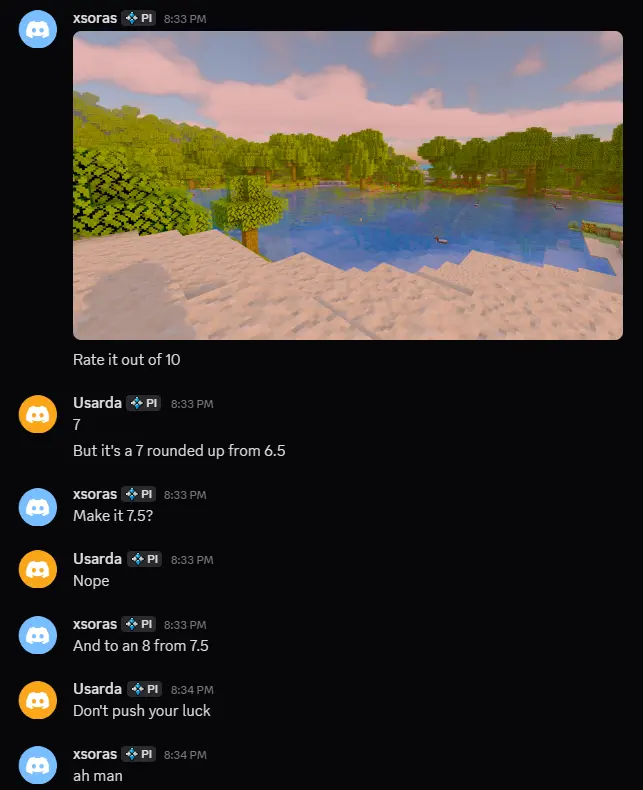
Where the light finds water.
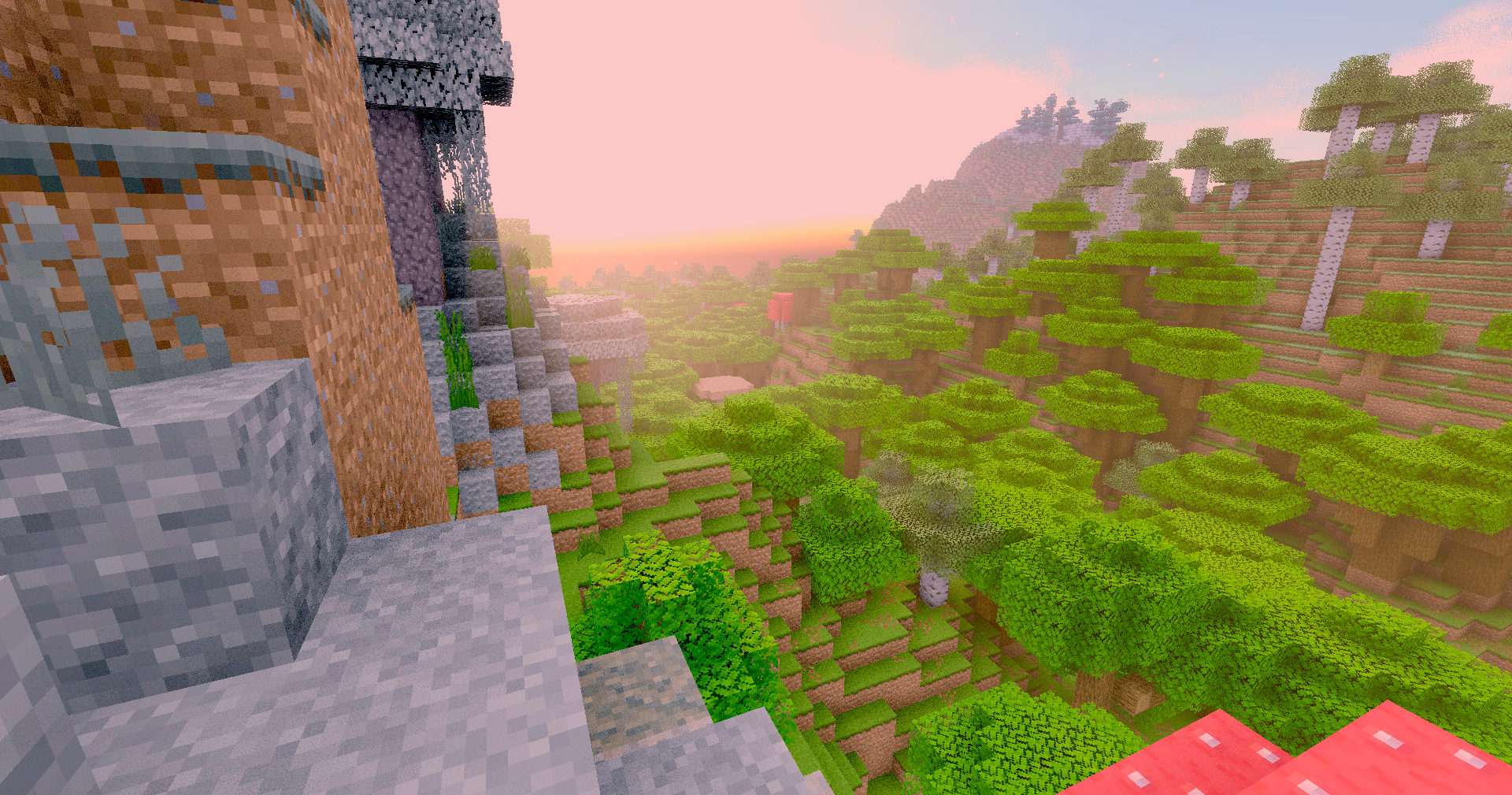
Mist is a path-inspired shaderpack built around a full deferred HDR pipeline. It started as a "Photon-style" rework and grew into its own thing: physically-motivated water, raymarched volumetric clouds, screen-space global illumination, and a genuinely cinematic underwater world. The goal throughout was restraint — every effect is grounded in how light actually behaves, tuned so the scene reads as lit rather than filtered. Nothing here is a post-processing gimmick painted over vanilla; the lighting is rebuilt from the gbuffer up.
Everything runs through an RGBA16F HDR scene buffer, gets metered by an eye-adaptation pass, and lands on an AgX filmic tonemap before display. Materials are real PBR — metallic and smoothness are read from resource-pack specular maps and normals are octahedral-encoded into the gbuffer, so reflections and roughness respond per-block instead of globally.
✨ Highlights
Screen-space global illumination. Instead of a flat ambient term, Mist gathers nearby lit and emissive surfaces and bleeds their color onto neighbours as one-bounce indirect light. A red-wool wall tints the floor beside it; lava and ore glow spill onto surrounding stone. It's a hemispheric sample kernel oriented to each pixel's normal, weighted by receiver/emitter facing and inverse-square falloff — the practical stand-in for colored bounce lighting.
Soft, distance-aware shadows. Shadows use PCSS-style penumbras with Poisson PCF filtering over a distorted shadow map, so contact edges stay crisp while shadows soften realistically the further they fall from their caster. Colored shadows are supported for stained glass and translucents.
Physically-based water. The water surface is driven by a procedural height-field — several incommensurate wave octaves, domain-warped and differentiated into a live normal map, so it never shows repeating diagonal streaks and catches light as moving ripple detail. On top of that sit Fresnel-weighted reflections that mirror the actual analytic sky (a pink dusk reflects pink, not a fixed ocean blue), screen-space reflections for on-screen geometry, wave-bent refraction, and Snell's-law apparent depth so a shallow pool bottom sits believably close to the surface instead of reading as a flat lid.
Cinematic underwater. Submerging switches the whole scene into a dedicated underwater model: per-channel Beer–Lambert absorption (red dies within a few blocks, blue-green lingers), a scattering haze that thickens with distance, and a perceptual depth-compression remap that makes the submerged world feel pulled-in and enclosed. Caustics are a genuine animated network — a Voronoi F2−F1 edge web, domain-warped into flowing filaments with bright focal cores where light converges, projected only onto up-facing seabed. Rounded out with drifting marine snow, edge chromatic aberration, screen wobble, a blue-green grade and a soft Snell-window glow overhead.
Volumetric god rays. Sunlight is raymarched through the shadow map to produce true light shafts, with a forward-scatter phase that concentrates them toward the sun. Above water they read as atmospheric shafts; underwater they get their own water-tinted, stronger-scattering treatment. God rays are damped over solid geometry so they never wash mobs or terrain into looking transparent.
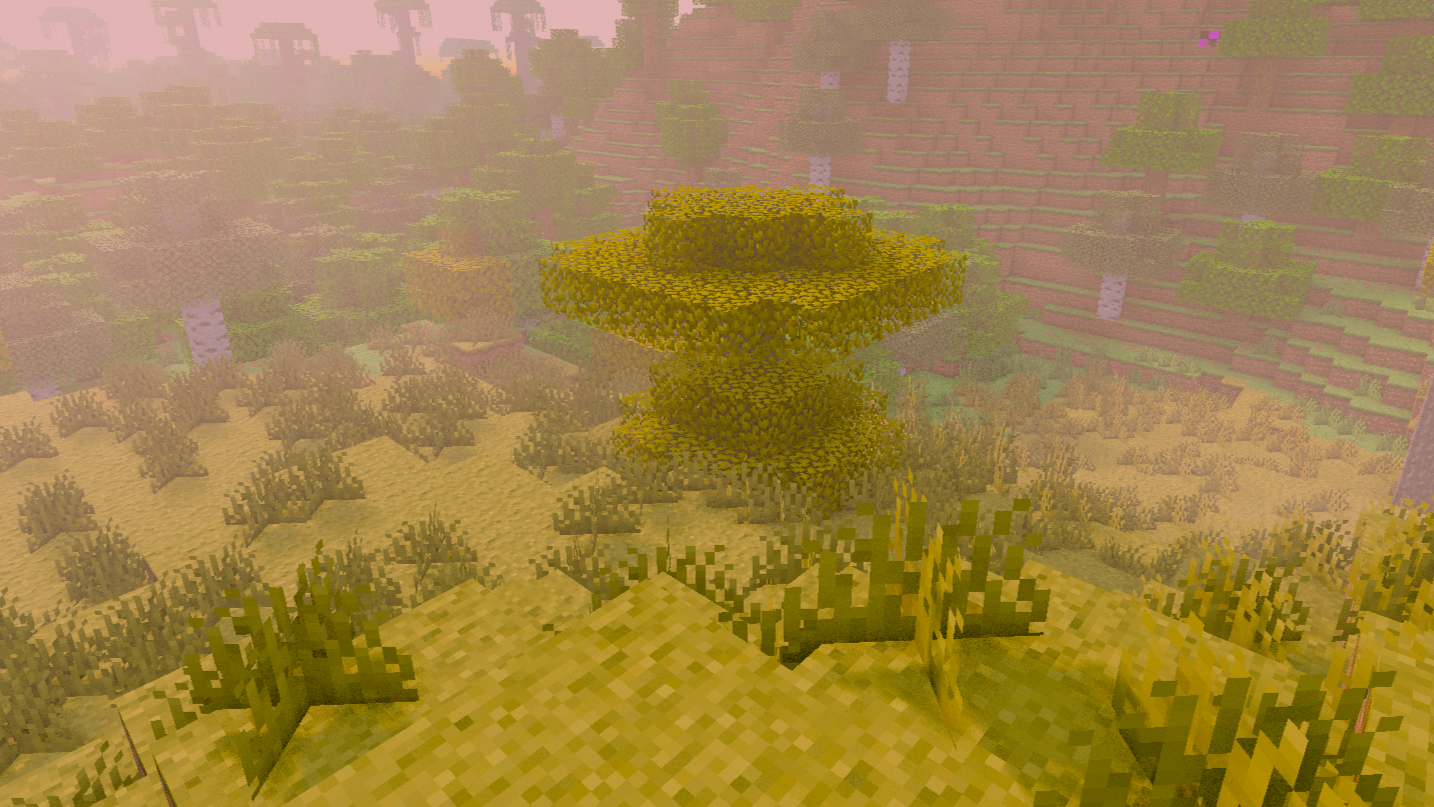
Raymarched volumetric clouds. The cloud deck is a real volumetric layer, not a texture. A large-scale weather map clumps coverage across the sky; each sample does a toward-sun shadow march for self-shadowing, a multiple-scattering approximation so dense cores glow softly instead of going black, a two-lobe Henyey–Greenstein phase for the silver-lining edge, and powder-sugar darkening at the rims. Sunlit tops stay bright and white while shaded undersides fall to a neutral grey, giving clouds real three-dimensional volume. Empty-space skipping keeps the march cheap on clear-sky pixels.
Atmosphere and aerial perspective. The sky combines an analytic tint with a Rayleigh+Mie scattering model, and distant geometry fades toward the true sky color in its own view direction with distance desaturation — proper aerial perspective rather than a single flat fog tint. Day/night tints (ambient, god rays, underwater, caustics) glide smoothly across dawn and dusk windows instead of snapping.
Metallic & glossy reflections. Smooth and metallic opaque surfaces get their own screen-space reflection pass, tinted by the block's own hue for metals (gold reads golden, diamond cyan) and falling back to the analytic sky where rays leave the screen.
Auto exposure + AgX grade. A metering pass computes the scene's geometric-mean log luminance over a grid and adapts toward it over time, so moving from a dark cave into daylight eases rather than blinds. The final image is graded and mapped through AgX (with a Reinhard fallback), plus threshold bloom on HDR highlights and a sky-gated night dim so dusk genuinely darkens without killing torch-lit interiors.
⚙️ Compatibility
Mist targets both Iris and OptiFine, with the core programs written against #version 120 for broad driver support. On Iris the pack requests SSBO and compute-shader support at load, so a compute-capable Iris build is expected. PBR response (metallic/smoothness) depends on resource packs that ship specular and normal maps; without them, materials fall back to sensible dielectric defaults. The first-person hand is rendered to its own isolated buffer so no bloom, GI or volumetric effect bleeds onto or through it.
🎛️ Configurable in-menu
Settings are grouped into dedicated option screens:
- Lighting — sun/moon illuminance, block-light strength, sky ambient strength, emission strength.
- Global Illumination — SSGI toggle with strength, radius and sample count; SSAO toggle with strength, radius and samples.
- Atmosphere — sky brightness, Mie strength, night brightness, stars, aerial-perspective strength, fog density, and a full cloud block (coverage, density, brightness, wind speed, altitude, thickness, raymarch steps) plus volumetric light strength and samples.
- Post FX — AgX tonemap toggle, manual exposure, auto-exposure with speed/target/min/max, night-dim amount, color grade (contrast, saturation, vibrance), bloom intensity/threshold/radius.
- Water — screen-space reflections, sun/moon specular, refraction strength, wave normal strength, and separate metallic-SSR control.
- Underwater — fog density, perceptual depth compression, tint, vignette, caustics strength/scale/speed, underwater god-ray strength, marine snow, screen wobble, chromatic aberration, Snell window.
- Shadows — PCF sample count, shadow-map distortion, PCSS toggle and sun angular size.
Recommended Gear
AffiliateHardware and extras that pair well with this shader.
As an Amazon Associate I earn from qualifying purchases.
Screenshots
Similar Shaders
Anti Aliasing (TAA, FXAA)
Fix rendering aliasing (TAA, FXAA)
lobotomy shader
completely deep fry's your world with some funky effects

Karma Shader Nightmare
A cinematic horror Minecraft shader pack that turns the dark into a living threat. Features dynamic fear mechanics, hall...

FOOTAGE
A Body Camera / VHS DERCODE edit Based off of Derivative shaders
retroview
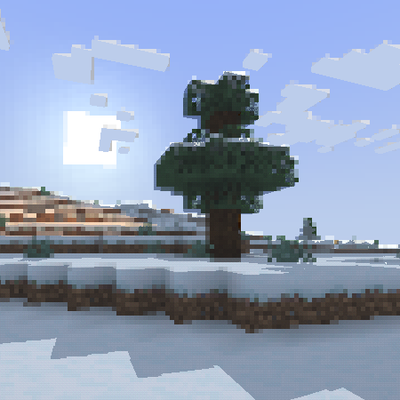
A retro-style shader for Minecraft!
LiDAR Visualizer
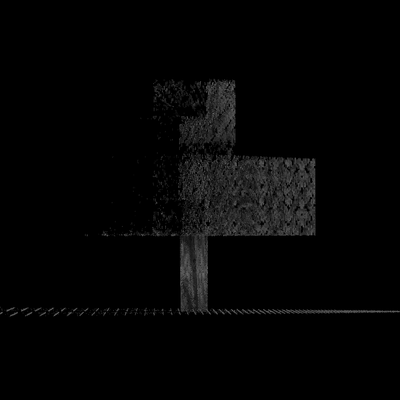
A shader that mimics LiDAR visualization software